A phone directory case set copyright's creativity floor
Feist rejected sweat-of-the-brow protection and required minimal creativity, a standard the Office's registration practice still applies.
3 min · source-led record↗
100 records / One research shelf
Search documentation-led notes, historical cases and studies. These retained drafts were prepared on 16 September 2026; current prices, policies and legal developments need rechecking before you act.
No matching record. Try fewer words or reset the filters.
Feist rejected sweat-of-the-brow protection and required minimal creativity, a standard the Office's registration practice still applies.
Burrow-Giles tied photographic copyright to posing and arrangement, the human-authorship line the 2023 AI guidance calls its leading case.
The Ninth Circuit held a macaque lacks Copyright Act standing, reasoning the Office's own AI guidance still leans on against non-human authors.
Vannevar Bush's 1945 memex proposal describes associative retrieval decades before word processors, not a machine that composes text.
Weizenbaum's 1966 ELIZA paper describes keyword pattern-matching, not language generation, and warns against reading fluency as understanding.
Microsoft's own developer documentation describes spelling and grammar checks as flagged suggestions a user decides on, not silent rewrites.
Word's tracked-changes documentation records who changed what, a visible-edit mechanism disclosure proposals now borrow for AI-assisted drafts.
Tegic's 1995 patent describes a frequency-ranked dictionary lookup for ambiguous keypresses, the direct ancestor of today's predictive text.
Nuance's Dragon dictation line, now under Microsoft, still documents converting spoken words into editable text rather than drafting them.
Google's own 2006 posts show Writely acquired, then merged with Spreadsheets into the always-online, multi-editor document.
Part 1 of the Copyright Office's AI report recommends a federal right against unauthorized digital replicas, leaving other issues to later parts.
The pre-publication Part 3 report says AI training can be fair use for research but not for commercially competing output.
The Copyright Office's March 2023 guidance requires applicants to disclose and exclude AI-generated material from what they claim.
KDP's living content guidelines require disclosing AI-generated text, images and translations but not AI-assisted editing or brainstorming.
Apple's own formatting guide requires an AI Generated by attribution distinct from a human author credit.
B&N Press requires authors to declare AI-Created versus AI-Assisted work, using terms that do not match Amazon's or Apple's.
Kobo's blog and content policy say it won't feed books into an LLM while barring content generated primarily by automated tools.
From 2 August 2026 the AI Act requires marking some AI-generated content, on top of copyright duties already binding AI model providers.
ICMJE, COPE and WAME each state AI tools cannot meet authorship criteria because they cannot take responsibility for a manuscript.
AP and Reuters both bar generative AI from creating news imagery while allowing it as production infrastructure elsewhere in the newsroom.
The Authors Guild's 2023 complaint against OpenAI targeted how books entered a model, not just what a chatbot outputs.
A 2026 summary-judgment motion asks the court to decide fair use as a matter of law, not send it to a jury.
Bartz v. Anthropic found training fair use but ruled downloading pirated books was not, sending only that question to trial.
Anthropic's piracy settlement pays class members by title, but only for books the Copyright Office shows were registered on time.
Kadrey v. Meta found for the platform not because copying was harmless, but because these plaintiffs did not prove market dilution.
A federal court upheld the Copyright Office's refusal to register a work whose applicant claimed no human involvement at all.
Zarya of the Dawn kept copyright in its text and layout while the individual Midjourney images lost protection entirely.
The Times sued OpenAI and Microsoft over chatbots it says both trained on and reproduced its journalism nearly verbatim.
A federal panel consolidated twelve author, publisher and news suits against OpenAI into a single New York proceeding.
An Authors Guild survey found members reporting that publishers often failed to register the copyrights AI settlements now require.
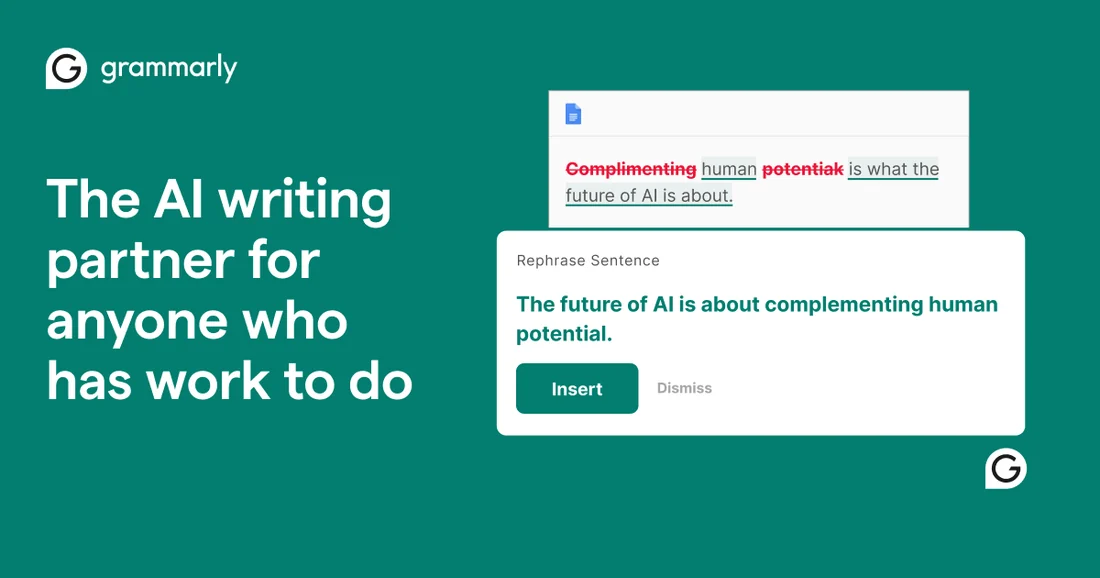
Grammarly's current pricing and support pages state what free, Pro and Enterprise tiers include, as retrieved in September 2026.
Sudowrite's own plans page ties its tiers to monthly AI credits rather than word counts, as retrieved in September 2026.
Jasper's own trial and pricing pages describe a platform built for brand content, not book-length prose, as retrieved in September 2026.
Notion's own help center and product pages describe AI writing tools inside its existing workspace, as retrieved in September 2026.
Google's March 2023 announcement and its current Docs help page describe the same drafting feature under different names.
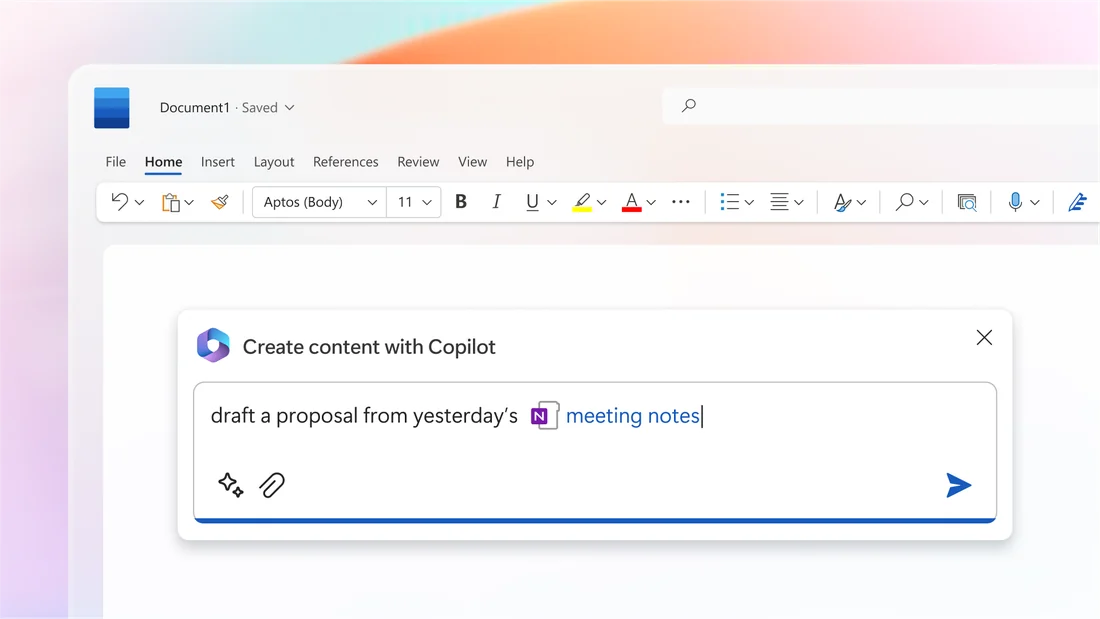
Microsoft's March 2023 announcement and current support page describe what Copilot in Word drafts, rewrites and requires you to verify.
ProWritingAid's own pricing tiers and a separate data-safety page describe cost and manuscript handling, as retrieved in September 2026.
LanguageTool's premium page and privacy policy state what Premium adds and that inputs are not used to train its models.
OpenAI's original November 2022 post and its February 2023 Plus announcement mark what changed and what stayed free.
OpenAI's and Anthropic's own help pages both flag confident-sounding errors as a named risk for writing and research tasks.
Elicit's own pricing page limits its claims to searching, summarizing and extracting from a defined set of papers and trials.
Scite's own site defines Smart Citations as showing support, challenge or discussion, not just recording a reference.
ACX's own royalty page sets two production-cost models and two royalty tiers due to converge by the end of 2026.
Apple's authors documentation sets eligibility and voice rules for digital narration, present on its site by January 2023.
Amazon's content guidelines extend AI-generated disclosure to translations, and its own translation tool adds a licensing term.
OpenAI's own pages show consumer plans default to training use with an opt-out, while business tiers default to none.
ElevenLabs' own terms and use policy require consent or legal right before a real person's voice can be replicated.
DeepL separates a marketed accuracy claim from a concrete difference in what a free versus a paid account retains.
Google's help pages describe quote-level citations restricted to a user's chosen sources, not open web retrieval.
Perplexity's own documentation states each answer links to numbered citations that the user is expected to verify.
KDP's own royalty page shows the 70 percent ebook rate is conditional on territory, price floor and file size, not a flat number.
Apple's own documentation states a flat 70 percent ebook royalty with no exclusivity requirement, a different bargain from Amazon's tiered program.
Kobo's own earnings page ties its ebook royalty rate to a price threshold rather than to the retailer alone.
Barnes & Noble Press documents a flat ebook royalty and a print royalty set against a variable per-book printing cost.
IngramSpark's 2025 rate card shows title set-up and pre-approval revisions are free, with cost concentrated in a per-sale market-access fee.
Draft2Digital's own FAQ and terms show a flat activation fee, an annual maintenance fee and a nonexclusive license alongside its commission.
PublishDrive's own pricing page sells tiered subscriptions with a stated 0 percent commission, a different bet from percentage-based aggregators.
BookBaby's own pages show a direct-storefront royalty well above its stated range for sales through other retailers.
Lulu's own selling page ties a higher royalty share to its own storefront and a lower-friction path to wide retail distribution.
Reedsy's 2026 guide prices self-publishing services from its marketplace's quote data, labeled indicative rather than a survey finding.
The Publishers Association's own 2025 figures show UK revenue at a record high while print still supplies most consumer sales.
TikTok cites NielsenIQ and Media Control data for 50 million BookTok-linked sales in Europe, a platform claim, not proof of causation.
Kickstarter's own data and retrospective show a $41.75 million campaign built on an existing fanbase and a 30-person publisher.
NetGalley's own pricing page prices advance-copy distribution per listing and promotion, not per review, as retrieved 16 September 2026.
BookSirens' own pricing page ties author fees to reader downloads, with a stated average review rate it does not guarantee.
FTC guidance and its 2024 reviews rule both reach book reviews obtained through free copies, regardless of who or what wrote them.
Goodreads' own guidelines separate rating manipulation and undisclosed free copies from ordinary negative reviews.
Amazon's own community guidelines prohibit compensated, fake and seller-linked reviews, rules written without regard to a review's origin.
The Audio Publishers Association's own release separates a Toluna-run sales survey from an Edison Research consumer survey.
Neil Clarke's blog post on Clarkesworld's 2023 spam spike shows what an AI-writing flood cost one small magazine.
ICMJE's recommendations tie authorship to accountability, a threshold its own guidance says a chatbot cannot meet.
COPE's position statement says AI tools cannot meet authorship criteria and must be disclosed wherever they contribute.
WAME's recommendations bar chatbot authorship and require authors to verify that a citation actually supports what a chatbot claims.
The Authors Guild's model clauses let an author reserve, license or require approval over specific AI uses of their book.
The Society of Authors reports member-survey findings on falling income and offers a label for books written without generative AI.
PEN America's Speech in the Machine sets out free-expression risks from generative AI, distinct from copyright claims in court.
APA's journals policy requires citing a generative AI tool used in a manuscript while barring the tool from being named an author.
AP's generative AI standards flatly prohibit altering news photos while treating AI text output as unvetted source material.
Fairly Trained's Licensed Model certification flags AI companies that license training data, without ruling on any book's authorship.
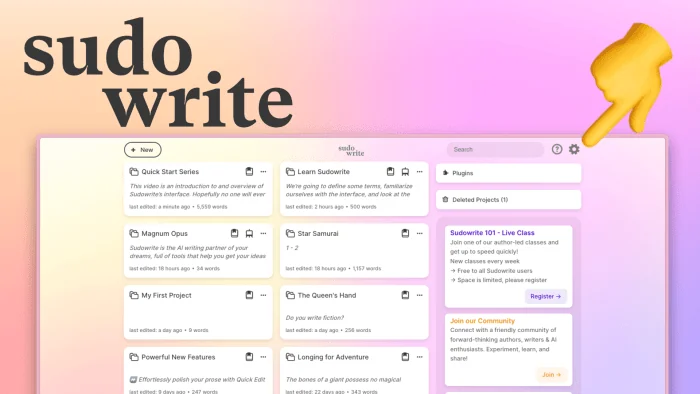
Sudowrite's staged outline tools and Notion AI's blended prompts show two different vendor answers to where assistance starts.
Both vendors document a tone or rewrite feature that changes register, not claims, a narrower job than full drafting.
OpenAI, Anthropic and ProWritingAid document different training and retention rules depending on which product tier is used.
Word's documentation shows tracked changes record a self-entered name, with no built-in category for AI-generated edits.
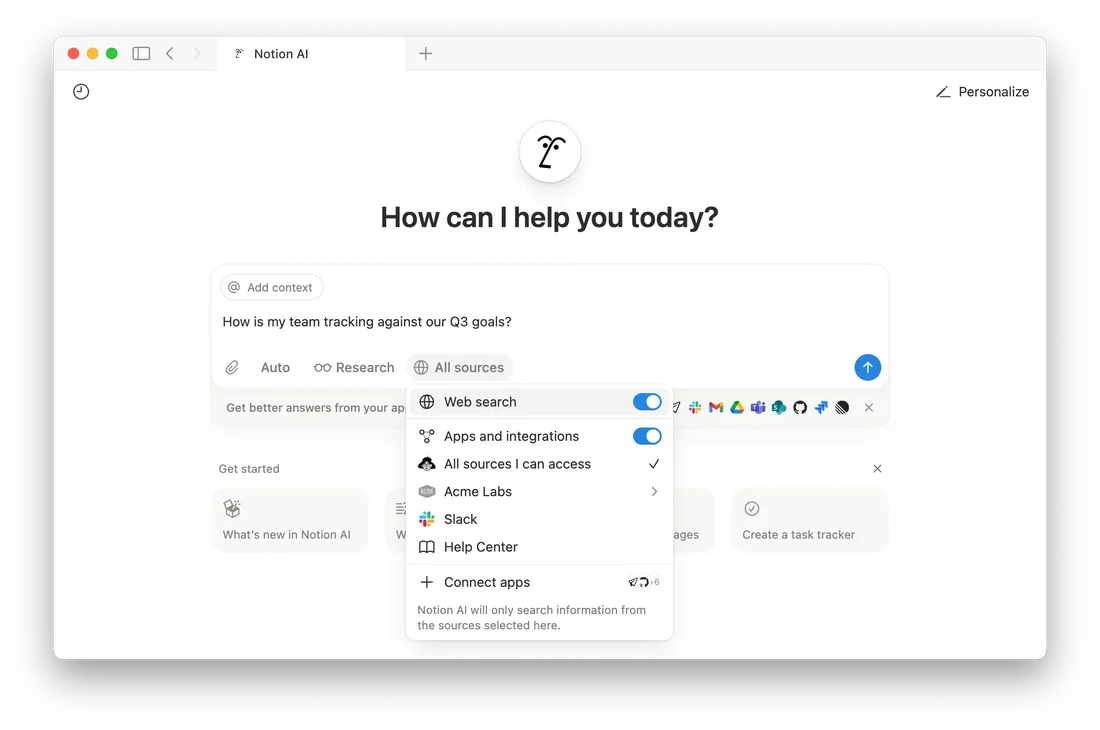
OpenAI and Notion each instruct users to check generated text against sources before treating it as finished.
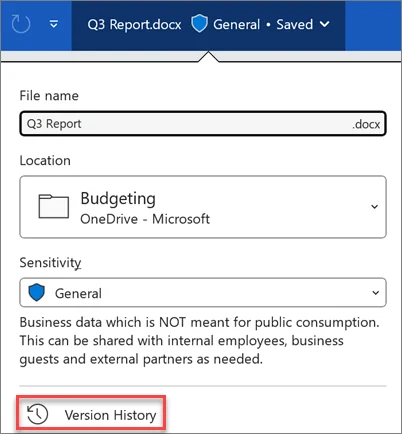
Google's and Microsoft's documentation show version history records timing and access, not whether text was AI-generated.
APA requires a methods-section disclosure, while WAME's recommendations ask for the prompts and dates behind the drafting.
ProWritingAid's own pages frame its Virtual Beta Reader report as feedback before human readers, not a substitute for one.
DeepL's benchmark page cites reduced post-editing, and KDP's rule keeps a machine translation AI-generated after edits.
Elicit's and Scite's documentation describe sentence-level citation records that a claim ledger practice would draw on.
A Scientific Reports study found non-expert readers misjudged AI poems as human more often than they misjudged real poems as AI.
A 33-participant study found ChatGPT users produced less distinct ideas than users of a non-AI tool, and AI-written book reviews cluster narrowly too.
A representative Pew survey found 53 percent of U.S. adults expect AI to worsen creative thinking, versus 16 percent who expect improvement.
A CHI 2023 experiment found a one-sided writing assistant shifted both what 1,506 participants wrote and what they later said they believed.
A Science-published experiment found ChatGPT access cut professional writing time by 40 percent and raised rated quality by 18 percent among 453 workers.
The WMT24 findings paper reports 10 systems judged mainly by humans on Chinese-English web fiction, a narrower scope than the task page had announced.
A Stanford study found seven GPT detectors misclassified 61 percent of non-native English essays as AI-written, versus near-perfect accuracy on native essays.
A Stanford method estimates 6.5-16.9 percent of reviews at four AI conferences were AI-modified; a related study found up to 17.5 percent in CS papers overall.
Nature's survey of about 1,600 self-selected researchers found many use generative AI for manuscripts; its methodology says the sample is not representative.
A transfer-learning classifier reached 96.86 percent accuracy distinguishing real Amazon book reviews from reviews generated by the Vicuna language model.
Chevalier and Mayzlin's own paper explains it tracked Amazon and Barnes & Noble sales ranks from two days in May 2003, not verified sales.